Newly formed · Founding-stage vision

A vision for the trusted map of the space economy.

Space Industry is a newly formed company with a focused ambition: to connect space systems, organizations, people, verifiable identity, and responsible automation.

Founding-stage concept. Architecture and interfaces are illustrative; no operational platform or complete dataset is claimed.

Proposed system architecture
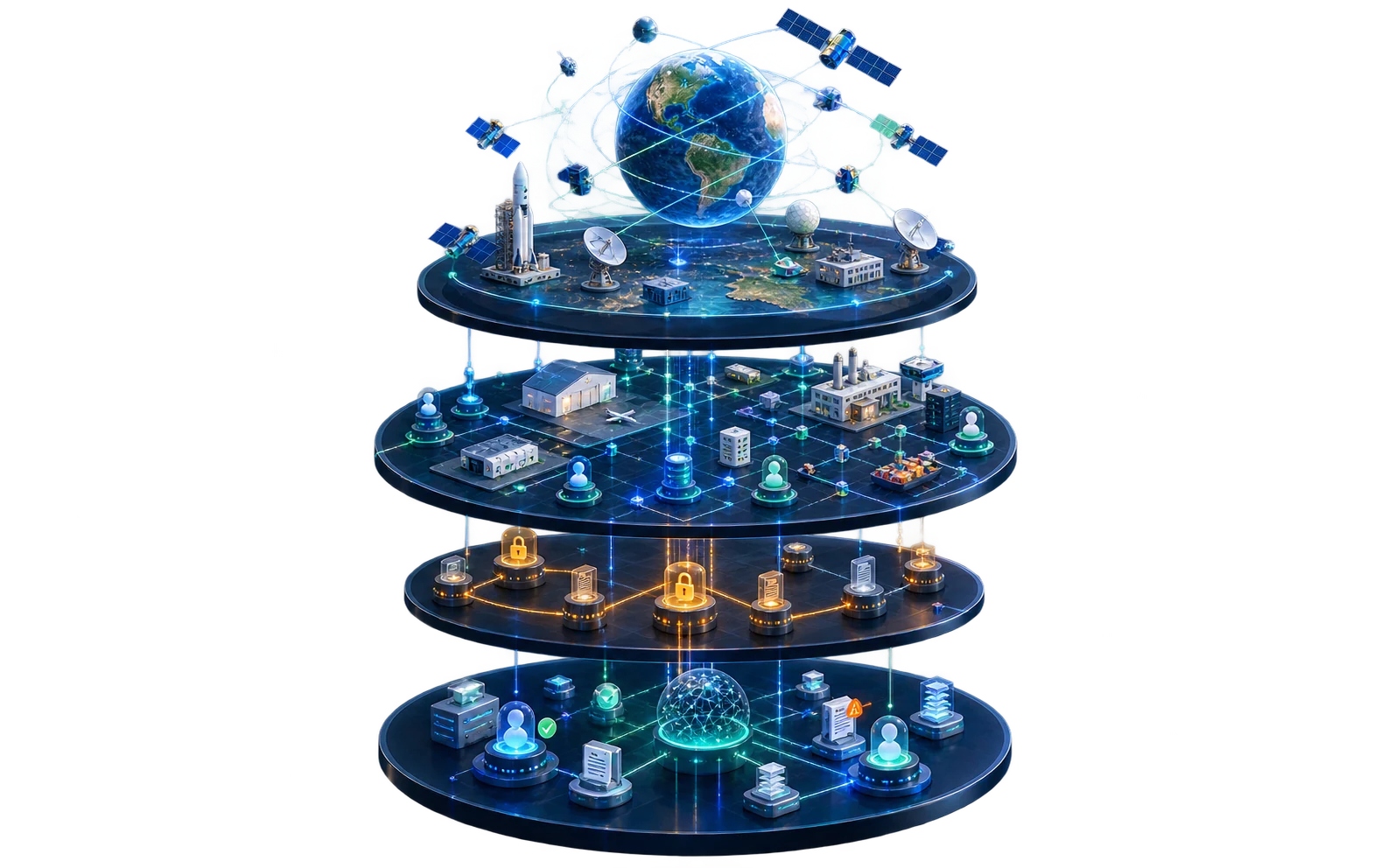
3D isometric concept linking space systems, industry data, verified identity, cryptographic proofs, smart contracts, and AI agents
Structured by designProposed entities and relationships
Evidence firstClaims designed to retain provenance
Privacy awareSensitive records planned off-chain
Built for oversightAI assistance with human control

01 — Proposed architecture

From space data to trusted coordination.

Our vision separates records, identity, cryptographic proof, automated rules, and AI assistance so each layer can be governed clearly.

01

Space Graph

A proposed map of missions and space systems.

We aim to structure missions, spacecraft, launch systems, orbits, ground stations, facilities, and technical dependencies.

  • Mission records
  • System relationships
  • Source provenance
Planned outcomeA queryable model of space activity

02

Industry Graph

A proposed map of the organizations behind space.

We plan to connect agencies, companies, divisions, facilities, suppliers, programs, people, skills, and institutional relationships.

  • Entity hierarchies
  • People and roles
  • Supply-chain links
Planned outcomeA navigable model of the space economy
03

Verified Identity

Portable evidence for people and organizations.

A proposed Space Industry ID could connect identity, employment, education, project participation, and assessed skills at the claim level.

  • Persistent identifiers
  • Claim-level evidence
  • Permissioned sharing
Planned outcomeA portable, evidence-backed profile
04

Blockchain Proofs

Selective proof without exposing private records.

Cryptographic anchors could make selected credentials tamper-evident while detailed, changing, and sensitive information stays off-chain.

  • Signed claim hashes
  • Issuer attestations
  • Revocation status
Planned outcomeIndependently verifiable evidence
05

Smart Contracts

Narrow rules for defined verification events.

Planned contracts could manage authorized issuers, credential status, revocation, and verified milestone workflows.

  • Issuer registries
  • Credential lifecycle
  • Milestone rules
Planned outcomeAuditable rules for specific workflows
06

AI Agents

Evidence-aware assistance built on trusted inputs.

Future agents could research the graphs, cite evidence, match verified capabilities to requirements, and flag records for human review.

  • Evidence-backed research
  • Mission and workforce matching
  • Change monitoring and data review
Planned outcomeExplainable assistance with human oversight
Initial focus · First 12 monthsSpace Graph + Industry Graph Foundational identity
Later layersCryptographic proof Smart contracts Evidence-aware AI

Proposed design principle: current records would remain in updateable systems; blockchain would verify selected claims; AI would work from permissioned evidence.

Space Graph

A proposed model of the systems behind missions.

The Space Graph would give missions, spacecraft, launch systems, facilities, and ground infrastructure stable records with dated, source-backed relationships.

Lunar mission
Launch vehicleSpacecraftGround network
Launch siteInstrumentsMission operations

Concept model: each future relationship could carry its source, date range, and confidence status.

Industry Graph

A proposed model of the institutions behind each system.

The Industry Graph would aim to resolve names and map ownership, divisions, suppliers, facilities, programs, teams, roles, and verified capabilities.

Organization operates a mission
Supplier provides a subsystem
Professional holds a verified role
Source supports each claim

Illustrative relationship types only—not a claim of existing records or partnerships.

02 — Industry Graph concept

How connected organizations could be represented.

We aim to move beyond a flat directory. A future entity could connect to divisions, facilities, programs, missions, technologies, suppliers, and people.

Illustrative concept recordsProposed Organization Model

CONCEPT UI · 6 examples

Government agency

NASA

Centers, directorates, programs, facilities, missions, partners, and people.

Mission and program hierarchy

Intergovernmental organization

ESA

Directorates, establishments, member states, programs, missions, and partners.

Member-state relationships

Government agency

ISRO

Centers, units, launch systems, programs, missions, technologies, and collaborators.

Center and mission hierarchy

Private company

SpaceX

Launch systems, spacecraft, sites, manufacturing, missions, and suppliers.

Vehicle and mission relationships

Public company division

Lockheed Martin Space

Business areas, programs, spacecraft, facilities, technologies, and partners.

Division and program hierarchy

Public space company

Rocket Lab

Launch systems, spacecraft, components, facilities, missions, and customers.

Product and mission relationships

Concept interface only. Examples show the proposed data structure; no partnership, endorsement, live data, or dataset completeness is implied.

PROPOSED SPACE INDUSTRY IDCONCEPT
Fictional 3D astronaut profile for the proposed Space Industry ID

Concept Profile

Illustrative spacecraft systems professional

Example persistent identifierSI-P-00018492
Identity Example: verified
Employment Example: verified
Mission participation Example: source-backed
Skill: PythonExample: self-declared

Illustrative product architecture—not an active credential or user profile.

03 — Verified identity concept

One proposed identity for professionals and students.

We aim to develop a portable Space Industry ID where identity, education, employment, project participation, and assessed skills can be verified as separate claims.

  • Persistent identifiers across changing roles
  • Evidence attached to individual claims
  • Permissioned sharing with employers and events
Planned student pathway

University collaboration → prerequisite mapping → focused training → assessed skills → entry-level verified ID.

04–05 — Blockchain proofs & smart contracts

Proof where it helps. Private data where it belongs.

Our proposed model keeps profiles and documents in updateable systems. Only compact verification evidence would be anchored on-chain when independent proof adds value.

1Issuer checks a claimProposed: employment or mission participation
2Record could be signedDetailed evidence would remain off-chain
3Proof could be anchoredA verifier could detect tampering or revocation
Proposed smart-contract usesNarrow, auditable functions
Issuer registryCould recognize institutions authorized for a credential type.
Status and revocationCould show whether a future proof is active, expired, or revoked.
Milestone rulesCould release approval after a defined, independently verified event.
Not stored on-chainPersonal profiles, private documents, proprietary data, or changing operational records.

Design principle: make selected claims easier to verify without making sensitive information permanent.

06 — Proposed AI agents

Defined jobs, traceable evidence, human limits.

If developed, agents would work from structured, permissioned records, explain their results, and leave consequential decisions to people.

Research agent

Could build cited industry briefs.

Would query proposed organization and mission graphs while returning sources and freshness for important claims.

Planned output: evidence-linked research
Matching agent

Could find verified capability.

Would compare requirements with permissioned, verified roles, skills, project history, and availability.

Planned output: explainable matches
Integrity agent

Could flag records for review.

Would surface changed sources, stale claims, conflicting records, expiring credentials, and broken evidence links.

Planned output: a human review queue
Proposed guardrail: future agents could recommend and coordinate, but would not silently rewrite verified facts, expose restricted records, or make final hiring or mission-safety decisions.

07 — Planned data principles

Trust would be designed into the process.

01

Collect

Prioritize authoritative first-party, regulatory, research, mission, and reputable public sources.

02

Normalize

Resolve names, entity types, ownership, dates, locations, and relationship definitions.

03

Verify

Attach evidence to individual claims and show uncertainty instead of hiding it.

04

Connect

Model relationships among organizations, people, missions, facilities, and technologies.

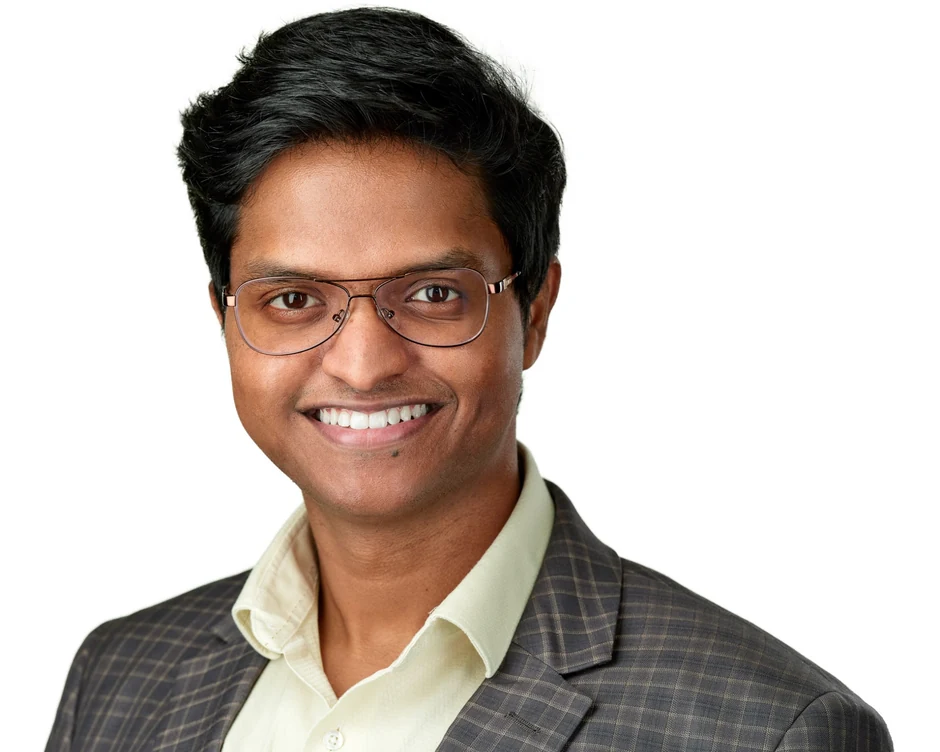
Akhil Turai, founder of Space Industry
Akhil TuraiFounder · Aerospace Engineer

About the founder

A founding thesis grounded in infrastructure.

Akhil Turai is an aerospace engineer and entrepreneur exploring how structured data, verification, and emerging technology could better connect the space sector. Space Industry is the newly formed company built around that vision.

Graduate study in Big Data and Blockchain at IIT Patna helped shape a practical sequence: establish reliable data first, then add identity, cryptographic proof, smart contracts, and AI only where each solves a specific problem.

“The aim is not another directory. It is to build a dependable map that people and software can eventually use.”

Founding-stage invitation

Help shape the infrastructure from the beginning.

Space Industry welcomes conversations with people and institutions interested in helping shape trusted infrastructure for the space economy.

AdvisorsBuildersUniversitiesIndustry